HD-2D Final Fantasy
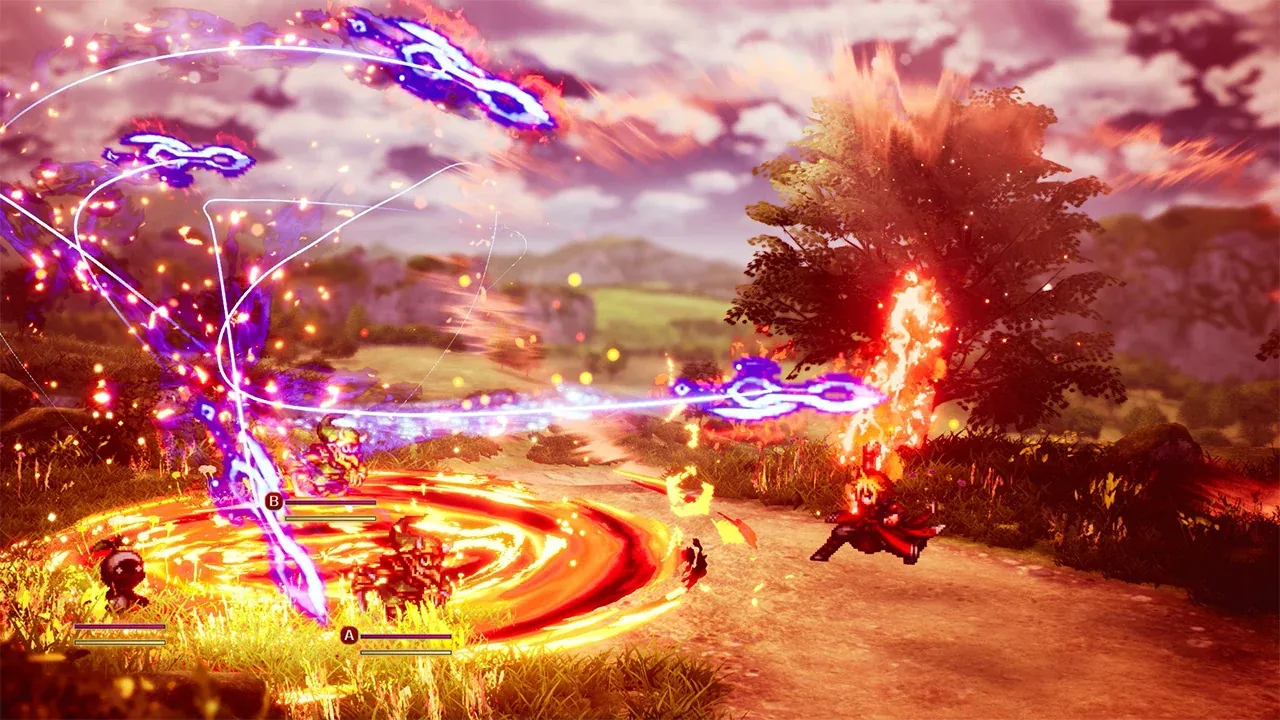
The Steam page positions Final Fantasy Resonance as the first Final Fantasy entry in the HD-2D lineup, mixing pixel art with dynamic camera angles and pixelized 3D models.
Combat and systems
Final Fantasy Resonance combines HD-2D pixel art, strategic turn-based battles, weakness breaks, Visions, and cinematic Resonance attacks.
Quick facts
The Steam page positions Final Fantasy Resonance as the first Final Fantasy entry in the HD-2D lineup, mixing pixel art with dynamic camera angles and pixelized 3D models.
The official store description focuses on exploiting weaknesses, staggering enemies, taking extra turns, and using Resonance attacks to finish fights. Developer interviews add that party setup and ability customization matter before battle, while field encounters are balanced around managing MP and recovery across an entire dungeon.
The July Pixel Trailer information confirms that Vision crystals let the party use a legacy hero's magic and abilities. Stronger bonds unlock more abilities, and staggering every enemy in one turn opens a Resonance attack. Visions can be earned from Sanctums of Light, side quests, and battles; the producer says all of them are obtainable through play rather than Vision DLC. Espers such as Ifrit, Shiva, and Titan join battle for three turns before using a final destructive attack.
Developer interviews describe traditional random encounters, with lower encounter rates in puzzle-heavy dungeons to reduce interruption. Regular battles are tuned around conserving MP and recovery resources across the route, while bosses have nearby save points so they can be more demanding without forcing a long replay. Casual difficulty is available for players who mainly want the story.
Optional content feeds back into progression. Tablet shards provide useful items, town minigames award performance-based rewards, Aileen forges weapons from adamantite found in dangerous crypts and side content, and the Colosseum offers stronger rewards as its opponents become harder. The Twelve Legendary Arms are claimed by defeating the monsters sealed within them, with the Chamber of Arms pointing players toward their locations.
Final Fantasy Resonance is not a remake of the first Final Fantasy and should not be described as a numbered mainline sequel. Its official positioning is a classic-rooted Final Fantasy RPG with crystals, airships, espers, moogles, Visions, and turn-based combat, while media coverage connects it to Final Fantasy Brave Exvius rather than to Final Fantasy I.
Yes. The official store description calls out strategic turn-based battles.
The Steam description describes them as powerful cinematic attacks used after creating battle openings.
Visit Sanctums of Light around the world to obtain Vision crystals.
Espers join the battle for three turns, then unleash a powerful final attack. Ifrit, Shiva, and Titan are officially detailed examples.
Yes. Developer interviews describe random encounters, with reduced encounter rates in puzzle-heavy dungeons.
Yes. Producer Keisuke Nakashima confirmed a Casual difficulty for players who want to focus on the story.
No paid Vision system has been announced. The producer says all Visions can be obtained by progressing through the game.
Media coverage connects the project to Team Asano. Keep that as reported context unless Square Enix publishes a stronger official production page.